From Connected Project Data to Construction Intelligence: Building the Foundation for AI-Powered Construction
Construction firms have invested heavily in technology to connect project information. Drawings, specifications, RFIs, submittals, BIM models, photos, and field reports are increasingly accessible from anywhere, helping office and field teams work from the same information.
Connecting project information is a critical first step. It improves collaboration, reduces rework, and helps office and field teams work from the same information. Leading contractors are now building on those gains by extending the value of connected information beyond individual projects. By capturing, preserving, and applying organizational knowledge across future work, they can make better decisions and improve project outcomes over time.
The next challenge facing construction firms is turning connected project information into construction intelligence, using project data, field activity, and institutional knowledge to improve decision-making, reduce risk, and create more predictable project outcomes.
Connected Information Is the Foundation
As discussed in our article, Connecting the Office and Field: A Better Approach to Construction Data Management, connected information is the foundation of modern construction operations.
For many firms, the initial focus was simple:
Connect project information so teams can work from the same source of truth.
The benefits were significant:
- Improved collaboration
- Reduced version confusion
- Greater project visibility
- Faster access to information
When project information is connected, teams spend less time searching and more time executing. But even with connected information, many project teams still struggle to answer critical questions:
- Have we seen this issue before?
- What lessons can we apply from similar projects?
- What does the specification require?
- What contractual obligations apply?
- What risks emerged on comparable projects?
The challenge is no longer finding information—it’s learning from it.
Construction Intelligence Lives Between the Office and the Field
Every construction project begins with a plan. During preconstruction, teams establish the foundation of project knowledge:
- Estimates
- Specifications
- Contracts
- Schedules
- Models
As construction commences, the field creates a second layer of knowledge:
- Jobsite photos
- RFIs
- Daily reports
- Coordination decisions
- Change events
- Lessons learned
- Email conversations
- Owner and subcontractor correspondence
- Project approvals and decisions
Some of the most valuable project knowledge never makes it into formal documentation. It often lives in email threads, attachments, inboxes, approvals, coordination discussions, and day-to-day decisions made throughout project execution.
At project closeout, much of this information is archived but rarely reused. Valuable expertise remains buried within completed projects, historical records, and individual inboxes, making it difficult for future teams to benefit from previous experience.
The firms gaining a competitive advantage are those that connect office information with field activity to create a complete picture of project performance. By capturing, preserving, and reusing project knowledge, they transform individual project experiences into organizational intelligence that improves future decision-making.
Turning Project History Into a Strategic Asset
Imagine a project team encountering a waterproofing issue during construction. Instead of starting from scratch, they can search historical project records and immediately find:
- Similar projects
- Previous field conditions
- Related RFIs
- Resolution strategies
- Lessons learned
The issue is resolved faster because the organization can learn from its own experience.
This is the difference between storing project information and operationalizing project knowledge. Leading contractors increasingly view completed projects not as archives, but as sources of intelligence. Every project becomes part of a growing knowledge base that supports future work.
Construction Intelligence in Action
Scenario: A project team encounters a waterproofing issue during execution.
Instead of starting from scratch, they search historical project records and instantly locate:
- Similar projects
- Related RFIs
- Previous field conditions
- Resolution strategies
- Lessons learned
The result? Faster decisions, reduced risk, and knowledge that compounds over time.
Building the Foundation for AI-Powered Construction
Construction firms generate valuable knowledge every day through project documents, field activity, correspondence, and project outcomes. However, AI can only deliver meaningful insights when information is organized, connected, and accessible.
Leading contractors are building the foundation for AI-powered construction by focusing on five key capabilities that transform project information into reusable organizational knowledge:
1. Capture
Knowledge is created throughout the project lifecycle. Field observations, project decisions, coordination discussions, approvals, lessons learned, and project outcomes all contribute to the organization's collective experience.
The most successful firms embed knowledge capture into everyday workflows rather than relying on teams to document lessons learned at project closeout. By capturing information as work occurs, organizations preserve valuable context that might otherwise be forgotten.
2. Structure
Information only becomes valuable if it can be found and understood later. Consistent metadata, naming conventions, project classifications, and folder structures help teams organize information in ways that support future search, reporting, and analysis.
Business systems such as Deltek VantagePoint often contain valuable project context, including project type, client information, location, status, and business unit. When this metadata is connected to project content, organizations create a richer information environment that supports future decision-making and AI-powered workflows.
3. Connect
Project knowledge rarely exists in a single document. Drawings, specifications, RFIs, contracts, photos, field reports, emails, and project communications all contribute to a complete understanding of project performance.
Leading contractors focus on connecting information across systems and project phases so teams can understand not only what happened, but why it happened. This context is often where the most valuable insights reside.
4. Search
Institutional knowledge has little value if employees can’t access it when needed. Teams need the ability to quickly locate relevant information across current and historical projects without relying on tribal knowledge or lengthy manual searches.
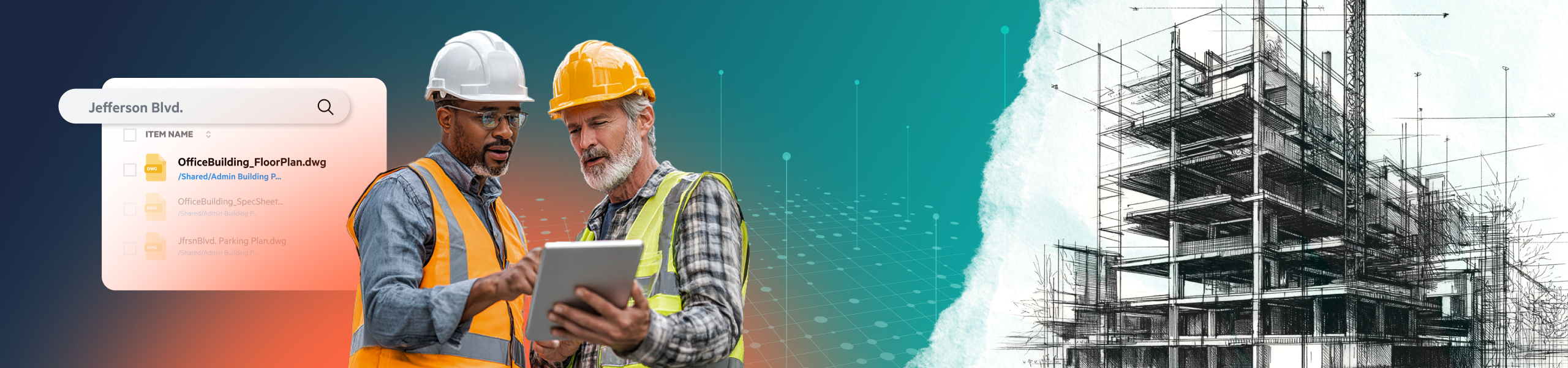
Whether searching for a previous field condition, a specification requirement, a contract provision, or a project decision documented in an email conversation, rapid access to information helps teams solve problems faster and make more informed decisions.
5. Reuse
The ultimate goal is to apply previous experience to future projects. When organizations can reuse lessons learned, best practices, historical project information, and proven resolution strategies, project outcomes become more predictable and repeatable.
Rather than solving the same problem multiple times, teams can build on the organization's collective experience. Over time, every completed project strengthens the firm's knowledge base and improves its ability to deliver future work.
Together, these capabilities transform project information into a strategic organizational asset. More importantly, they create the foundation for AI-powered construction by ensuring information is captured, connected, governed, and available when teams need it.
How AI Turns Construction Intelligence Into Better Decisions
Connected information and institutional knowledge become significantly more valuable when combined with AI. Instead of manually searching thousands of files, emails, RFIs, specifications, contracts, and historical project records, project teams can use AI to surface relevant information in seconds. Leading contractors are increasingly using AI to:
- Analyze specifications: Quickly identify requirements, responsibilities, exclusions, and compliance obligations.
- Review contracts: Locate contractual risks, obligations, milestones, and key project terms.
- Research historical projects: Find similar conditions, lessons learned, previous RFIs, and successful resolution strategies.
- Surface project intelligence: Connect information across drawings, specifications, field reports, emails, and project records to provide a broader project context.
- Accelerate decision-making: Deliver answers faster so project teams spend less time searching and more time executing.
AI readiness begins with information readiness. Firms that can organize, govern, connect, and preserve project knowledge are better positioned to use AI effectively because the quality of AI insights depends on the quality of the information available.
The Future of Construction Intelligence
The firms that gain the greatest advantage from AI aren’t necessarily those that adopt AI first. They’ll be the firms that have spent years building connected information environments, preserving institutional knowledge, and creating a foundation for construction intelligence.
As every completed project becomes a source of knowledge for the next one, organizations can make faster decisions, reduce risk, improve coordination, and continuously improve project delivery. Every project becomes an opportunity not only to deliver work, but to strengthen the organization's collective knowledge for the future.
Ready to Turn Connected Project Data Into Construction Intelligence?
Discover how leading contractors use connected information, institutional knowledge, and AI-powered insights to make faster decisions, reduce risk, and improve project outcomes.
Explore:
Deltek VantagePoint Integration